

I woke up Friday morning to a message from my best friend, Beatrice, that just said, “:( moira“ and my heart immediately filled with dread. There was only one Moira that we both knew - Moira Rose - and a frowning face could only mean the worst had happened: that the legendary actor, Catherine O’Hara, had died.
There was some denial, initially, since the message was followed with a link to r/Fauxmoi, and I so desperately wanted the news to be a recreation of the Schitt’s Creek episode, RIP Moira Rose (S04E05), where Moira Rose’s death was a hoax. Then, there was profound sadness. I had most recently watched her play a Hollywood executive in Apple TV’s The Studio, and Schitt’s Creek was a series that I’ll occasionally get back into; like many people, it’s one of my comfort shows that I can find solace in, no matter my mood.
Throughout the day, I’ve kept up with the multitude of tributes to her legacy. Macaulay Culkin and Dan Levy’s Instagram posts made me cry on the R5 bus. The Chicago O’Hare airport, the terminals of which Catherine ran through in Home Alone, tweeted in remembrance of her role in Home Alone.


In one Reddit post, someone said, “Rest in Peace Catherine O’Hara, a mother to Millennials everywhere.” That hit me. Catherine had played two iconic matriarchs - Kate McCallister and Moira Rose - who have guided a generation of millennials (and more) on the silver screen and its little sibling. And today, we just lost our TV mom.
I’m not going to sit here and wax lyrical about Catherine O’Hara’s legacy or the impact she has had on me and my relationship. Instead, I’m resurfacing an essay I wrote 6 years ago for Lifestyle Asia Singapore when the Schitt’s Creek finale aired on TV. I’ve edited it slightly as I hope my writing has improved a little since 2020, but only barely. Here’s to you, Catherine O’Hara, a mother to all millennials who have been so privileged to grow up watching you.
‘Schitt’s Creek’ is the brightest sitcom in the darkest night
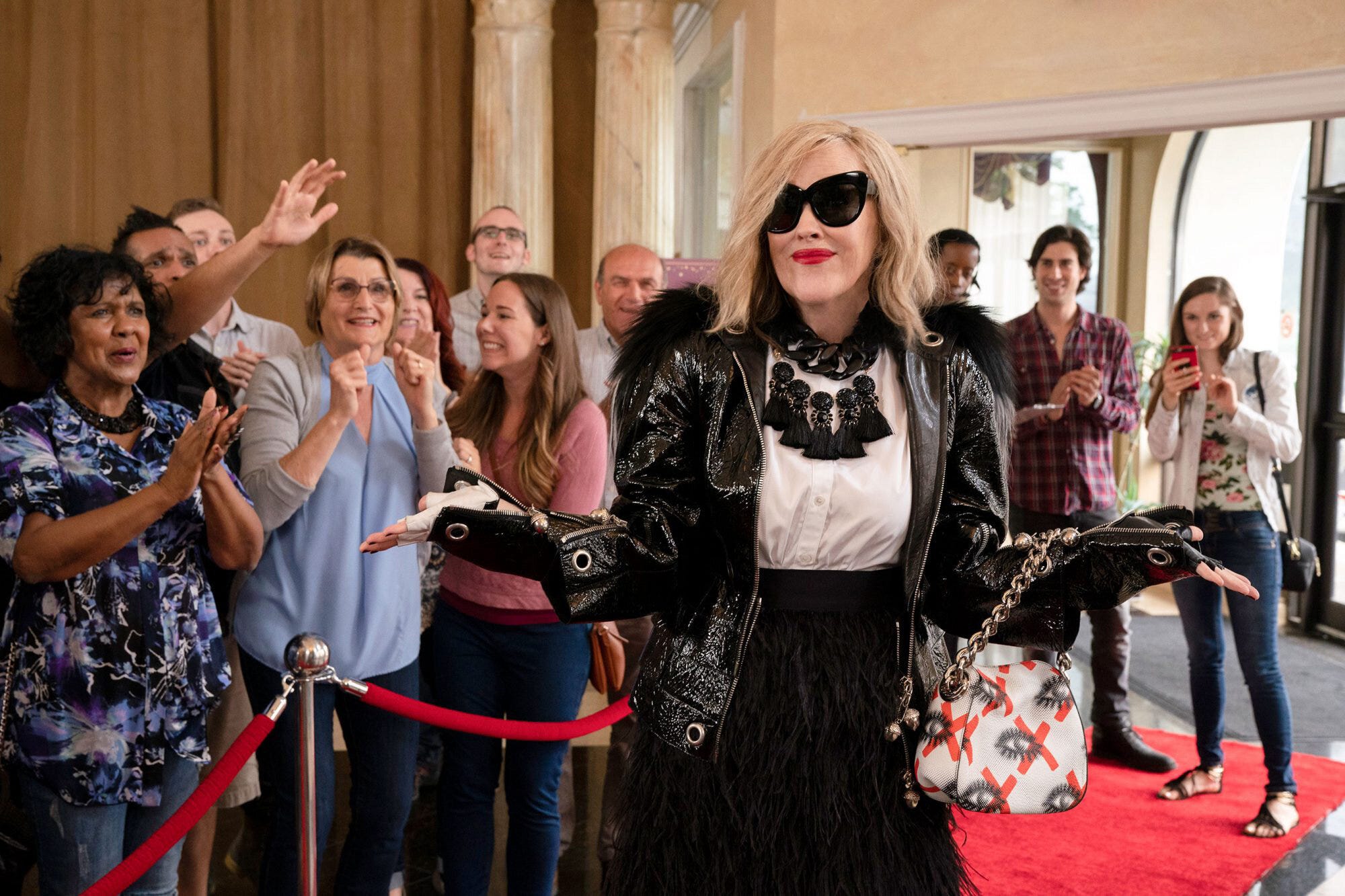
A happy ending is hard to come by on television these days.
After the trainwreck that was Game of Thrones’ last season, I was nervous going into the series finale of the sitcom Schitt’s Creek. But as the credits rolled, I sat in my chair for a couple of minutes, appreciating the rollercoaster ride of emotions that showrunners Eugene and Daniel Levy have set me on for six seasons.
No conclusion to a television series has made me laugh as loud while choking back the most tears. And judging by the finale’s response on the Internet, I wasn’t the only one wishing this experience didn’t end.
Now, I’m not the biggest fan of sitcoms, and my following through with one till the end is an occasion rarer than a pink supermoon. But there was something about the way in which Schitt’s Creek approached the format that had me obsessed from the get-go.
Perhaps it was the promise of a landscape that wasn’t a drab office with four walls or the dry humour that was totally on-brand with what I stood for. Either way, I’ve been following this show for years, and it’s about time it got the limelight it deserves.
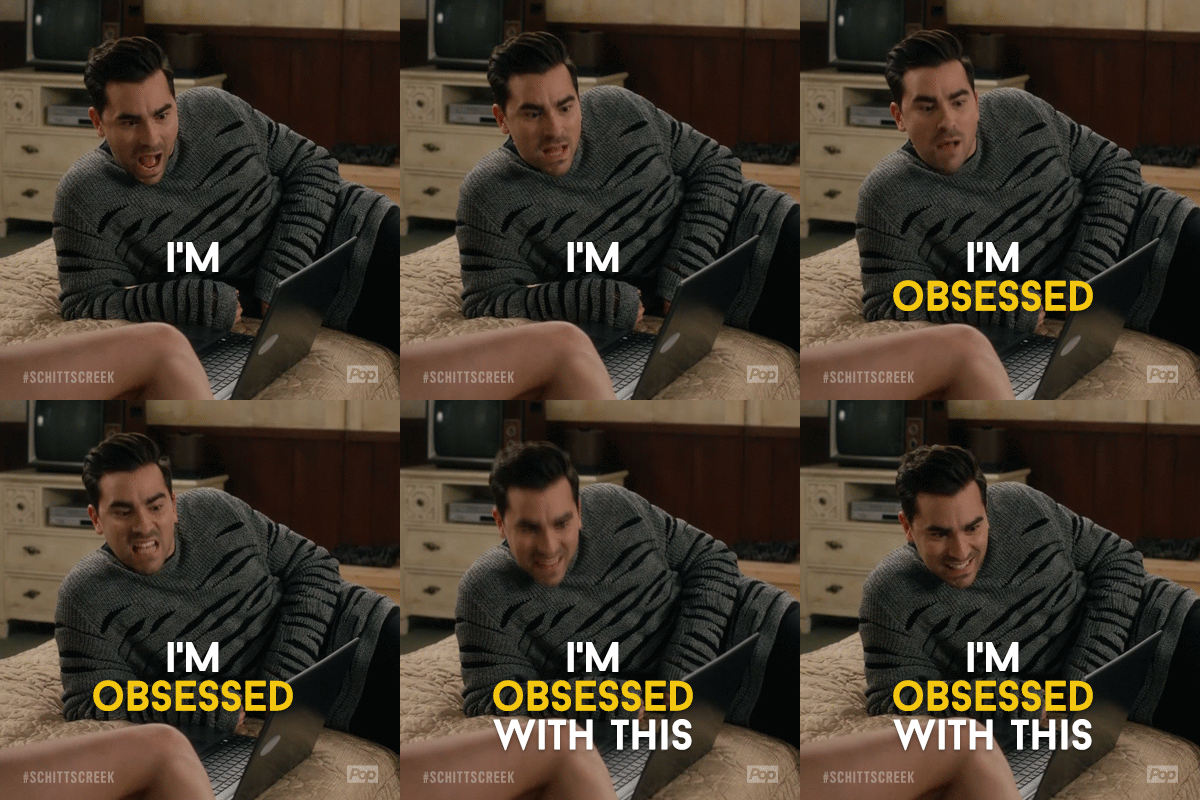
Schitt’s Creek made its premiere in 2015 with a simple riches-to-rags premise: The wealthy Rose family had lost everything they owned – except for the title deed to a humdrum town they bought as a joke back in 1991. Johnny (Eugene Levy), Moira (Catherine O’Hara), David (Daniel Levy), and Alexis (Annie Murphy) now find themselves and their entire lives – or what was left of it – packed into two rundown motel rooms in the said town, Schitt’s Creek. A room in their former mansion might have had more space.
There is an initial wave of tension between the elitist Roses and the townies of Schitt’s Creek, but that softens after many barn parties and long drives to Amish villages. David befriends the owner of the motel, Stevie Budd (Emily Hampshire), while Moira joins the a capella group Jazzagals led by Jocelyn Schitt (Jennifer Robertson). But it wasn’t until the end of the third season and the beginning of the fourth that a switch was flipped, and the narrative of Schitt’s Creek ascended into a higher dimension.
It was no longer just a fish-out-of-water story. The Rose family was slowly learning how to become a family. Not just with each other, but also with the people of Schitt’s Creek.
Johnny and Stevie form an endearing mentor/mentee bond as he invests in the motel. The Jazzagals mourn the death of Moira (a case of #fakenews, thankfully). [Wow, can’t believe I mentioned the aforementioned RIP Moira Rose episode 6 years ago.] David, not one for public displays of affection, steps out of his comfort zone in a rare showing of his love for his boyfriend Patrick (Noah Reid). Alexis starts her own PR firm that livened the town with sold-out events like Single’s Week.
Each of the main characters slowly discovers a better version of themselves, and that’s great because that is what stories are supposed to do. But what makes Schitt’s Creek stand out from other sitcoms in the wild is its perfect balance between sardonic humour and sincerity. The Levys have mastered the art of championing real, worldly issues without diving into the depths of comedy hell, with tolerance and wit reigning supreme in this backwater town.
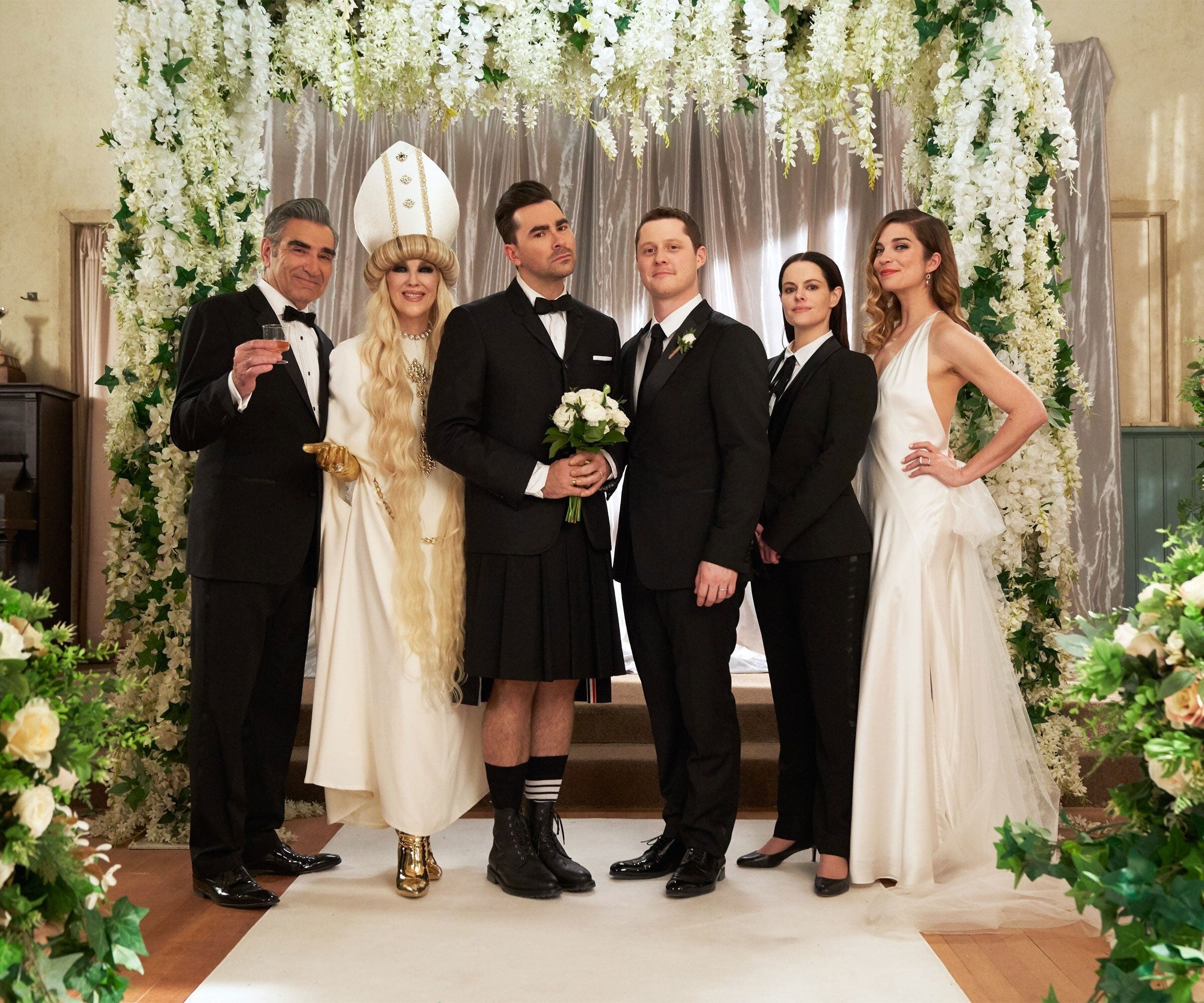
There is no tragic backstory or tokenism for the LGBTQ characters portrayed in Schitt’s Creek. Homophobia is a concept that doesn’t exist here, simply because Daniel Levy chose not to give that sort of negativity a platform. An example that defines the show’s attitude towards equality and acceptance was David’s pansexuality. “I like the wine and not the label,” he explained to Stevie. The succinct metaphor has since been used for real coming-out stories as told in the post-series documentary.
There is also no lack of viral, meme-worthy clips and extracts that cemented the show’s position in the hierarchy of popular culture. From Moira’s glamorous collection of wigs (every single one is named, BTW) to the pop banger “A Little Bit Alexis” that I just can’t get enough of. All that was made perfect for today’s age of social media consumption. It’s that easy to express yourself with an “Ew, David!” reaction GIF.
But beyond just the laughs, there are also heartfelt scenes that will tug so hard at your heartstrings. Who knew Patrick’s cover of an iconic Tina Turner song would inspire a new way for so many people to express their love? Or the Cabaret episode, where the aloof Stevie seized her fears by the throat and blossomed into a confident starlet who owns the stage. I’m not going to spoil any more of these tear-jerking scenes because you deserve to experience them for the first time as I did, caught unawares without a box of tissues by my side.
It’s a bit serendipitous that the series had to finish at a time when the world is going through so much grief and turmoil. I wish that there were more Schitt’s Creek episodes to look forward to next week because it’s one of the only things (besides food) that can make me laugh as hard as isolation would allow.
But at the end of the day, I found some comfort – no, a whole lot of it – in a story about a little town in the middle of nowhere. The story’s happily ever after also makes rewatching the show a lot easier, because there’s something to look forward to.
The Levys’ love story to the world was a small Canadian (?) town where smiling is made a little bit easier, and I hope that by sharing this gem of a show with you, it can make passing the days a little bit easier, too.